Owl you need is love!
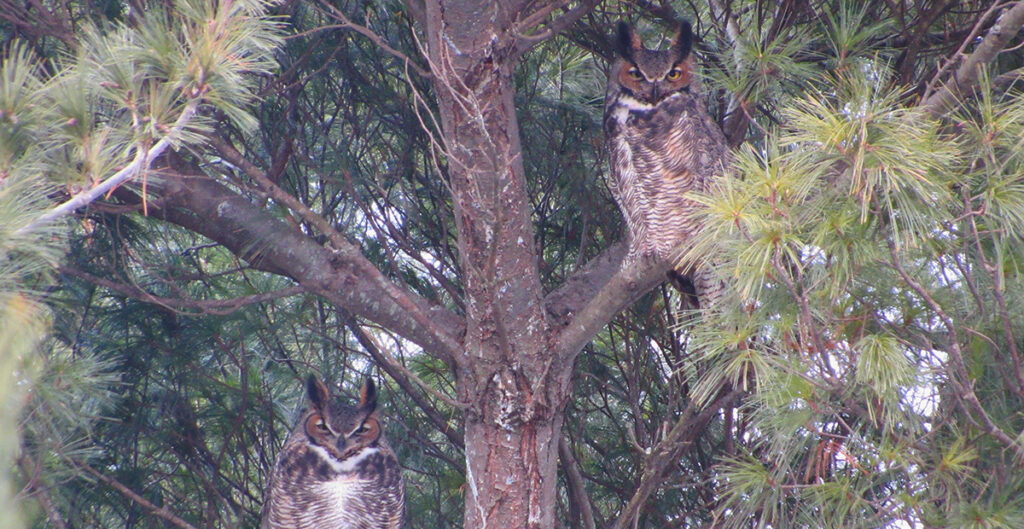
In December, we began noticing a pair of great horned owls spending time together in the tall white pine trees by the bus parking lot. The duo quickly became a regular sight, perching long enough to leave multiple owl pellets on the ground below. Recently, these love birds have been keeping a lower profile, as we believe they have begun nesting in another nearby tree.
Most owl species nest early in the year because their large chicks need enough time to develop before spring arrives. In Wisconsin, males generally establish a territory by December, with February marking the peak egg-laying season. During this time, owls call more frequently to protect their territory and communicate with their mate.
Once the eggs are laid, females take on incubation duties while males bring food to the nest. The eggs hatch in about 30 days, and young owlets have a layer of fluffy down to keep them warm until their wing feathers develop. They gain weight quickly and, just five to six weeks after hatching, are capable of short flights! The parents continue to care for and feed their young for several months, until it’s time for them to start their own lives, usually in early fall.
Owls can be challenging to spot because most are nocturnal hunters designed for stealth. If you take a hike at dawn or dusk in late winter, listen for their hoots. Once you hear one, scan dense tree branches carefully, looking both up and down. Deciduous trees have bare branches in winter, so owls often prefer evergreen trees, which provide protection from predators and the elements.
Interested in similar topics? Explore more articles tagged with Birds, Winter Birds, Raptors, and Owls.