Welcome

We are currently updating our website, please be patient if some links are temporarily unavailable.

Our facility will be closed on Monday, May 25th in observance of Memorial Day

Our building will reopen to the public at 9am on Tuesday, May 26th.

Everyday, our trails are free and open from dawn until dusk.

Our facility is open Monday through Friday, 9am to 4pm, and from 10am to 2pm on weekends.

Visit us. Everyday, our trails are free and open from dawn until dusk.

Spring Ephemerals

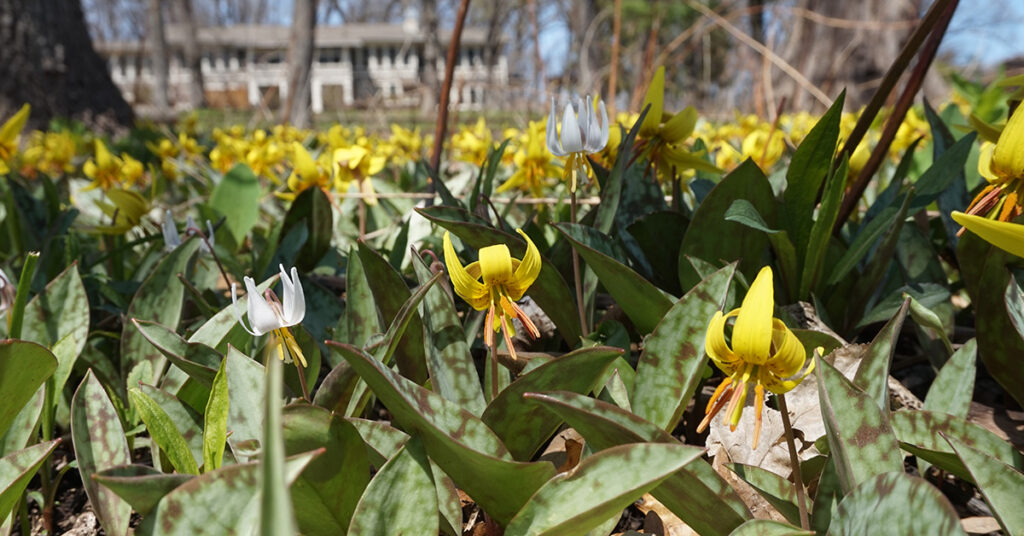
What’s blooming in the Kindergarten Woods? Spring ephemerals are the first perennial plants to emerge each year. They have a short growth and reproduction phase, with a brief blooming period followed quickly by seed production. As the season progresses, their leaves wither away, leaving only underground structures for the rest of the year. This strategy […]

Read More…

Early Spring Butterflies

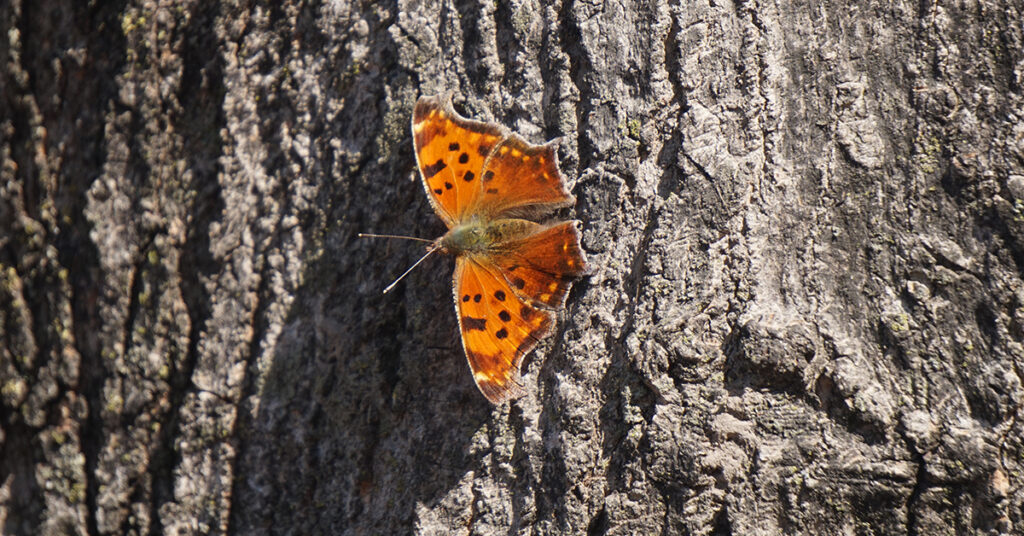
Did you know it is possible to spot adult butterflies in early spring? While most species spend the winter as eggs, caterpillars, or chrysalises, a few survive the cold months as adults. Both eastern comma butterflies (Polygonia comma) and mourning cloak butterflies (Nymphalis antiopa) overwinter in this form and can sometimes be seen flying at […]

Read More…

Coyotes

Coyotes are in their peak breeding season. Coyotes are active year round, but you are more likely to see and hear them in February. Mating season begins in January and continues through March. During this time, they vocalize more frequently and may roam farther than usual in search of a mate. Coyotes are monogamous and […]

Read More…

Hibernation, Torpor, Brumation, and Diapause Explained

How do animals survive winter? In winter, many animals enter a state of dormancy to survive, but not all forms of inactivity are the same. True hibernators reduce their metabolism, slow their heart rate, and drastically lower their body temperature. They enter a very deep sleep that is only occasionally interrupted to meet essential body […]

Read More…

Eastern Cottontails

Cottontails avoid predators in many ways, but camouflage is their best defense. The Eastern cottontail is the most common cottontail rabbit found in the United States and the only type found in Wisconsin. They are common in urban and residential areas and will stick around year-round. While it is not uncommon to spot a cottontail […]

Read More…

Aldo Leopold Nature Center