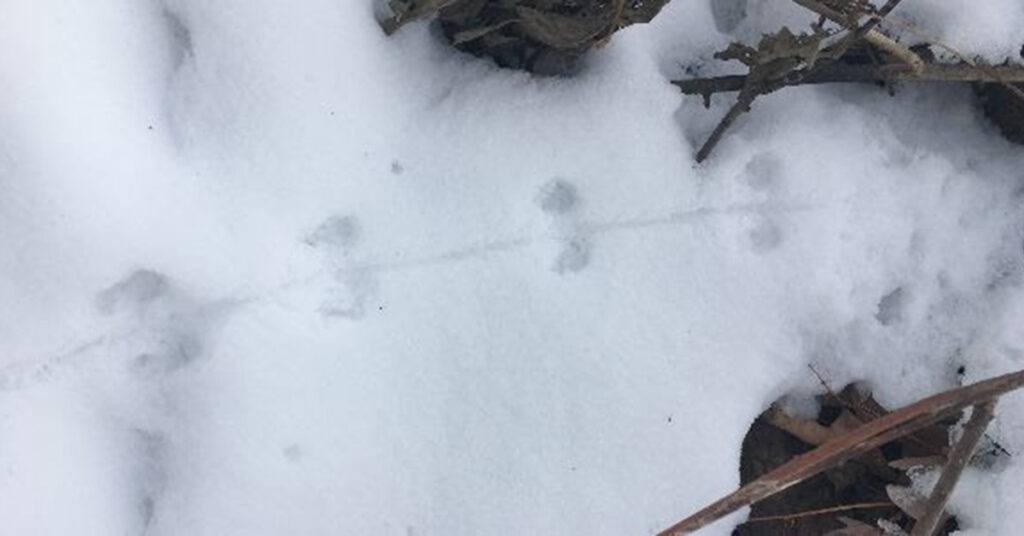
With all of the recent snow, it’s the perfect time to spot animal tracks!
When fresh snow settles on the ground, it becomes a natural canvas that reveals the activity of animals moving through it. Identifying tracks begins with noticing the overall pattern before focusing on the finer details. Size, shape, claw marks, tail drags, and the number of digits all offer clues, but the rhythm and repetition of prints often tell the clearest story. Observing the direction of travel and distinguishing front prints from hind ones brings the animal’s movement to life.
Some of the most distinctive patterns come from gallopers and bounders. Gallopers, such as rabbits, mice, squirrels, and chipmunks, move by hopping, placing their small front feet down first and landing their larger hind feet ahead of them. Bounders, like members of the weasel family, move with both forefeet landing together before their hind feet swing forward into nearly the same spot. These tracks usually appear as two prints side by side, then repeated in pairs along the trail.
Perfect walkers and waddlers fall at opposite ends of the movement spectrum. Perfect walkers, such as canines, felines, and deer, create tracks that appear nearly straight because the hind foot steps directly into the print left by the front foot. Waddlers, including bears, raccoons, skunks, muskrats, beavers, opossums, and porcupines, move their legs from side to side, producing an irregular line of four distinct prints in which the front and hind feet land close together.
Trackers also pay attention to the conditions around the prints. Snow depth affects how clearly a footprint registers, and melting snow can widen or distort the shape. Fresh tracks often have crisp edges that collapse slightly when pressed, while older tracks appear hardened or filled with debris. Other signs can confirm which animal passed through an area, including scat, chewed vegetation, burrows and tunnels, territorial markings, and scattered fur or feathers. Combining all of these clues helps build a more complete picture of winter wildlife activity.
Interested in similar topics? Explore more articles tagged with Animal Tracks.