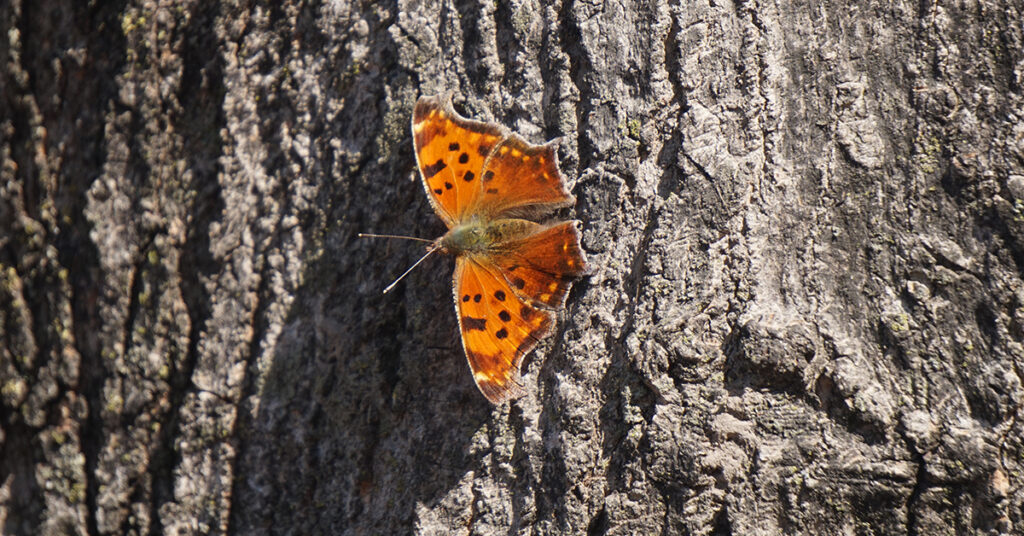
Did you know it is possible to spot adult butterflies in early spring?
While most species spend the winter as eggs, caterpillars, or chrysalises, a few survive the cold months as adults. Both eastern comma butterflies (Polygonia comma) and mourning cloak butterflies (Nymphalis antiopa) overwinter in this form and can sometimes be seen flying at the Nature Center on the first warm days of the year.
These butterflies have several adaptations for winter survival. They produce proteins and glycerol, a natural antifreeze, allowing their bodies to freeze and thaw safely. They also live much longer than most butterflies by slowing their metabolism. While most adults live only two to four weeks, butterflies that overwinter as adults can live for many months, with mourning cloaks reaching up to ten months.
Camouflage is another key strategy. They shelter in wood piles, under loose bark, or inside hollow trees and logs. When their wings are closed, the mottled brown and gray underside resembles dead leaves or tree bark, helping them blend into their surroundings. This camouflage protects them not only during winter but also in early spring as they move about searching for food.
How do these butterflies survive when few flowers are blooming? Unlike many butterflies that rely on nectar, eastern commas and mourning cloaks feed on other sugar-rich sources. They are often seen sipping sap that seeps from damaged trees, especially maples and oaks. They may also feed on fermenting fruit, animal droppings, or carrion.
Interested in similar topics? Explore more articles tagged with Invertebrates, Insects, and Butterflies.