Eastern bluebirds are back!
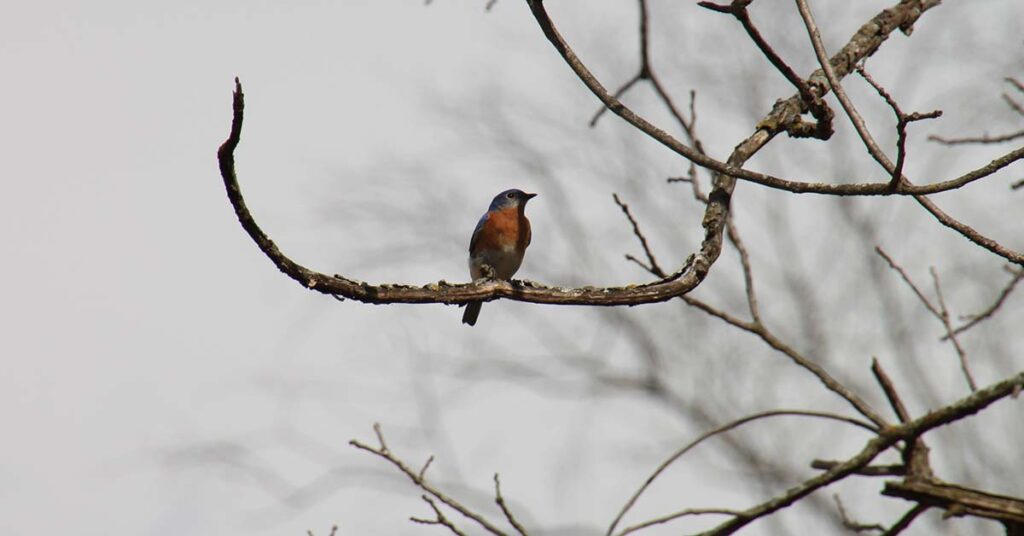
Eastern bluebirds are small thrushes with a big, round head and a short, straight bill. Male bluebirds are bright blue above with rusty throats and chests, while females are more subdued, gray above with bluish wings and tails and a soft orange-brown breast.
In the early 20th century, these beautiful birds were at the brink of extinction. Eastern bluebirds are secondary-cavity nesters, meaning they rely on existing cavities for nesting because they cannot peck out their own holes. They depend on other species, such as woodpeckers, to create these cavities. The introduction of European starlings and house sparrows, both aggressive competitors for nesting sites, contributed greatly to their decline. In addition to increased competition, fewer cavities were available due to habitat loss and the removal of dead trees in managed forests..
Thankfully, Eastern bluebirds have made an incredible comeback! Environmental protections and the introduction of optimized bluebird boxes that keep out larger competitors have helped the species recover. We have several nest boxes on site, and we are looking forward to spotting Eastern bluebird nestlings. Males attract females by carrying materials in and out of the nest, perching, and fluttering their wings. The female builds the nest by loosely weaving grasses and pine needles and lining it with finer grasses.
Eastern bluebirds can raise up to three broods a year, typically laying 2 to 7 eggs per brood. Just hatched, nestlings are featherless except for a few tufts of down, and their eyes remain closed. Parents feed them caterpillars, crickets, beetles, ants, spiders, mosquitoes, and other small insects. Nestlings usually fledge at 17 to 18 days.
Interested in similar topics? Explore more articles tagged with Birds, and Spring Migration.