How do animals survive winter?
In winter, many animals enter a state of dormancy to survive, but not all forms of inactivity are the same. True hibernators reduce their metabolism, slow their heart rate, and drastically lower their body temperature. They enter a very deep sleep that is only occasionally interrupted to meet essential body functions such as shifting position, urinating, or defecating. Some species eat from stored food reserves, while others survive solely on accumulated body fat.
During true hibernation, animals sleep so deeply that it is nearly impossible to wake them. Because of this, they need to be quick. Arousing from this state requires significant energy and time and typically involves passing through a lethargic phase. Groundhogs, ground squirrels, and some bat species are well known examples of true hibernators.
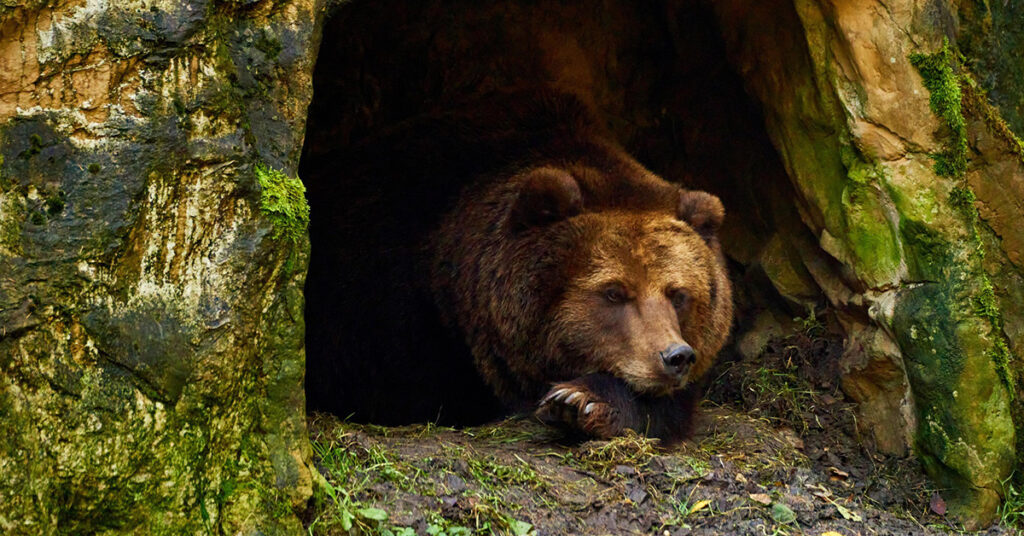
Contrary to popular belief, bears are not true hibernators but instead enter a state known as seasonal torpor. This explains the saying “never poke a sleeping bear,” as bears can wake quickly to respond to danger. While denning, they slow their breathing and heart rate, but their body temperature drops only slightly because their large size helps them retain heat. Other animals such as skunks, chipmunks, raccoons, opossums, and many winter birds may also enter short-term torpor during extreme cold or food shortages.
Brumation refers to the winter dormancy of reptiles and amphibians. Snakes, frogs, lizards, and turtles reduce their metabolism during cold months, yet they may drink water or bask if temperatures rise. They can survive for months without food while sheltering underground or underwater. As for invertebrates, they survive winter through diapause, a period of suspended development that occurs at specific life stages depending on the species. For example, adult mosquitoes die in winter, but their eggs persist by entering diapause.
Interested in similar topics? Explore more articles tagged with Hibernation, Torpor, Brumation, and Diapause.