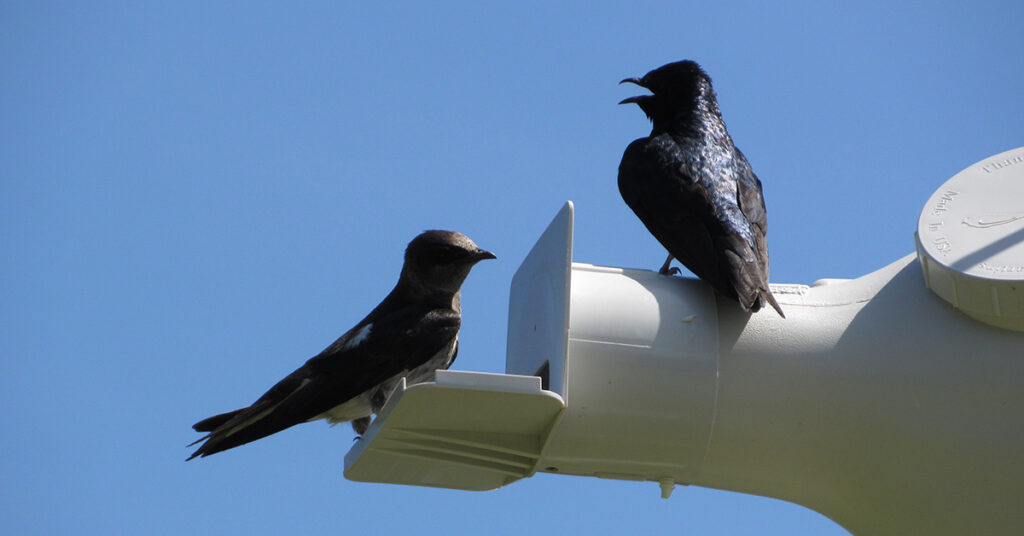
Purple martin houses have recently been installed in the Juniper Field.
A big thank you to the Eagle Scout team for their work installing the pole, houses, and educational sign. Purple martins are the largest swallow species in North America, and they often rely on human-made housing for nesting due to a shortage of natural cavities.
These aerial insect-eaters spend much of their day catching flying insects such as dragonflies, beetles, moths, and mosquitoes. They even drink on the wing, skimming low over water to take quick sips without landing. Their acrobatic flight and social nature make them a favorite summer sight in open habitats.
Purple martins raise one brood of young each summer and nest in colonies. Females lay one pure-white egg per day, resulting in a typical clutch of 4–6 eggs. After an incubation period of about 15 days, chicks hatch and remain in the nest for approximately 28 days before taking their first flight.
After the breeding season, purple martins gather in large flocks and begin their migration to South America. Around this time, they undergo a molt, replacing worn feathers that will help support their long journey and time spent in wintering grounds.
Interested in similar topics? Explore more articles tagged with Birds, and Migrating Birds.