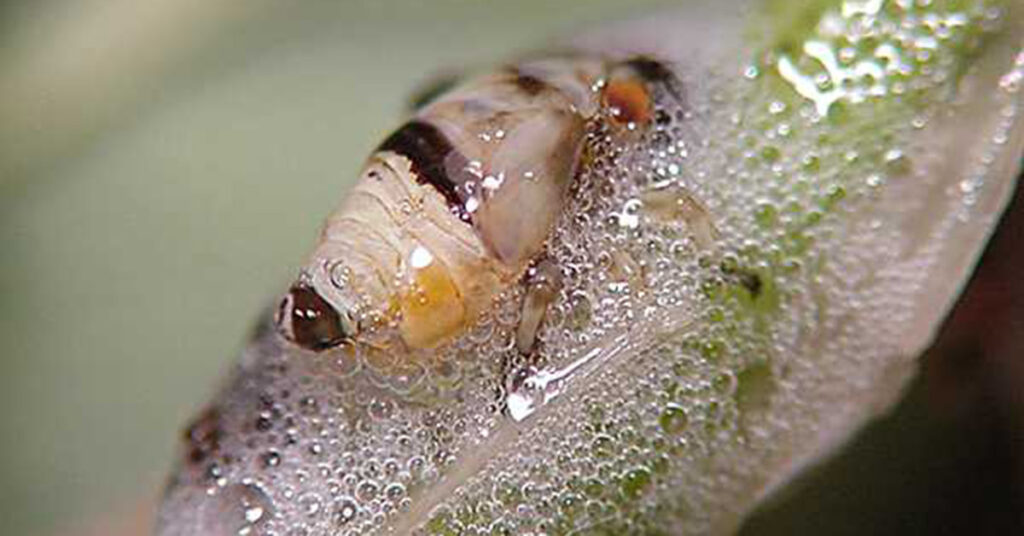
You might have noticed what looks like spit on plant stems this spring.
It isn’t spit at all—it’s made by spittlebug nymphs. These insects hatch in spring from tiny eggs that overwinter inside plant stems. The nymphs feed on plant sap, growing and molting several times before becoming adults.
The foamy “spit” forms as the nymph feeds on sap. Excess plant fluid mixes with a sticky substance the insect produces. When air is introduced, it creates bubbles, forming a white, frothy covering that hides the nymph from predators and helps protect it from temperature fluctuations.
Spittlebugs generally cause little harm to plants. They feed by tapping into sap, but their numbers are usually too low to cause noticeable damage. Most plants continue to grow normally even when spittlebug foam is present on stems or leaves.
Adult spittlebugs are quick, agile insects. When disturbed, they can leap several times their body length to escape predators. This jumping ability, combined with their camouflage, helps them avoid being easily noticed in gardens and natural areas.
Interested in similar topics? Explore more articles tagged with Invertebrates, and Insects.